Skip to content
Weight loss can feel simple from the outside: eat less, move more, stay consistent. In real life, it is rarely that easy. Hormones, metabolism, stress, sleep, medications, medical history, emotional eating, and past dieting patterns can all affect how the body responds.
At Revive Wellness Studio, Medically Supervised Weight Loss is designed to help patients approach weight management with structure, safety, and personalized support. For adults considering Medically Supervised Weight Loss in Seymour, IN, understanding the risks of trying to lose weight alone can help make the process feel more informed and less overwhelming.
Why is medical guidance helpful for weight loss?
Medical guidance can help identify health factors that affect weight, reduce the risks of unsafe dieting, personalize treatment, and support more sustainable progress.
Understanding Medically Supervised Weight Loss
Medically Supervised Weight Loss is a structured weight management program guided by trained professionals who take into account your health history, metabolism, body composition, lifestyle, goals, and potential medical barriers. Instead of relying on generic diets or quick fixes, the plan is built around what your body needs and what is realistic for your daily life.
A consultation, a review of body composition, a metabolic evaluation, individualized nutrition counseling, pharmaceutical support when necessary, progress tracking, and continuous accountability are all possible components of this kind of program. The objective is to promote general well-being, energy, and confidence, and to support long-term behaviors, in addition to reducing the number on the scale.
Why Losing Weight Without Guidance Can Be Risky
Trying to lose weight without medical supervision can seem harmless at first. Many people start with a restrictive diet, skip meals, take supplements, or follow advice from social media. The problem is that these approaches may not account for your health conditions, medications, nutrient needs, metabolism, or emotional relationship with food.
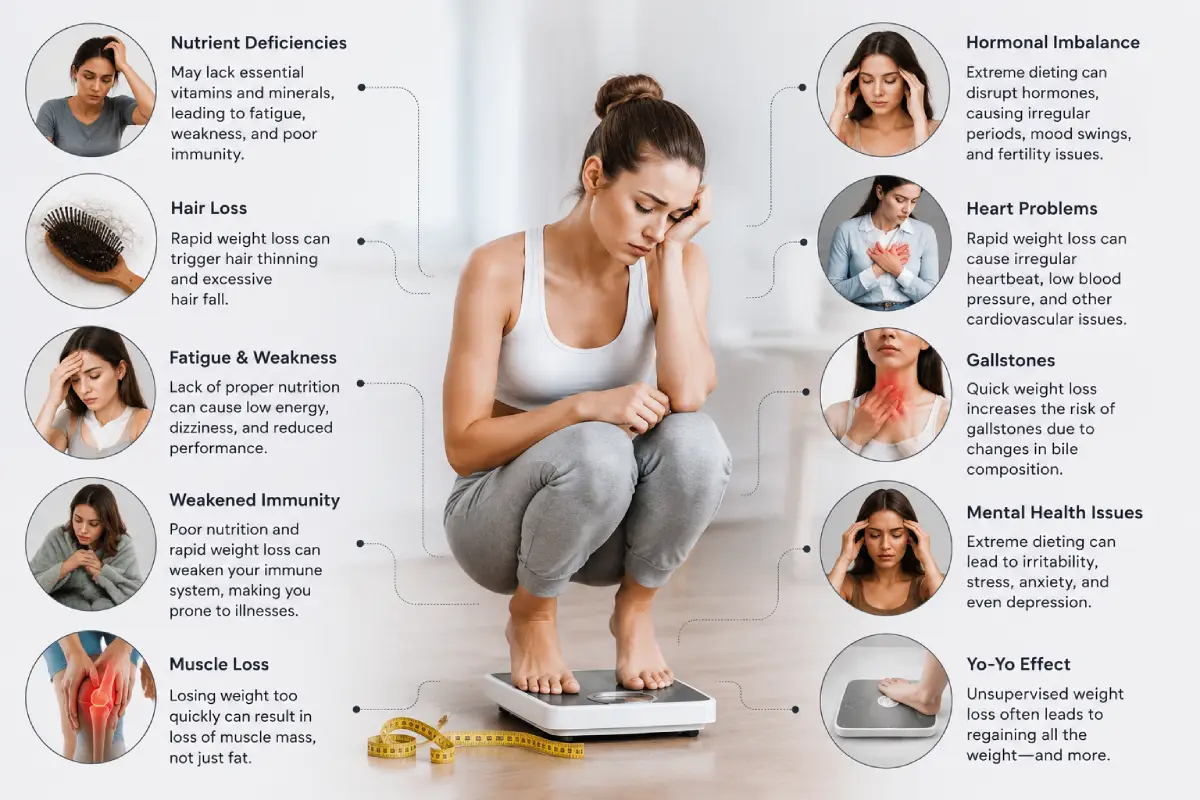
Fatigue, nutritional shortages, muscle loss, dehydration, slower metabolism, gallbladder problems, mood swings, disordered eating patterns, or weight gain might result from weight loss attempts if they are not properly supervised. Unsupervised weight reduction can be even more dangerous for some people, particularly those with diabetes, thyroid disorders, heart problems, hormone imbalances, or a history of long-term dieting.
Risk 1: Crash Dieting Can Harm Your Metabolism
Crash diets often promise fast results by severely cutting calories. While the scale may drop at first, much of the early loss can come from water weight and muscle rather than sustainable fat loss.
When the body receives too little energy for too long, it may adapt by slowing metabolic processes. This can make future weight loss more difficult and can increase the risk of weight regain. A medically guided plan helps avoid extreme restriction. Instead, it focuses on sustainable changes that support fat loss while protecting energy, nutrition, and long-term function.
Risk 2: Nutrient Deficiencies
Cutting out entire food groups or eating too little can lead to nutrient gaps. The body needs protein, healthy fats, fiber, vitamins, minerals, and hydration to function well.
Nutrient deficiencies can contribute to fatigue, hair thinning, dizziness, poor sleep, weakened immunity, mood changes, and difficulty recovering from exercise. Some people may not realize they are undernourished because they are focused only on calorie counts. Medical supervision can help ensure that your weight-loss plan supports your body rather than depriving it.
Risk 3: Loss of Muscle Mass
Losing weight is not the same as losing fat. Without proper protein intake, resistance training, and a balanced plan, the body may lose lean muscle along with fat.
Muscle is important for strength, mobility, metabolism, posture, and long-term weight maintenance. Losing too much muscle can leave you feeling weaker and may make it harder to keep weight off. A medically supervised program can help focus on sustainable fat loss rather than quick scale changes. Body composition assessment can be helpful because it looks beyond weight alone.
Risk 4: Unsafe Supplements
Many weight loss supplements are marketed with bold promises, but not all are safe or effective. Some may contain stimulants, hidden ingredients, or compounds that interact with medications.
Unregulated supplements may increase heart rate, raise blood pressure, cause digestive issues, disrupt sleep, or create anxiety. Some products may also place stress on the liver or kidneys. Medical guidance helps patients avoid risky shortcuts and choose safer, evidence-informed options when appropriate.
Risk 5: Medication and Health Condition Concerns
Weight loss can affect blood pressure, blood sugar, hormone levels, and medication needs. For people with diabetes, thyroid disease, heart conditions, kidney concerns, or other medical issues, losing weight without monitoring can create problems.
For example, eating too little while taking certain medications may increase the risk of low blood sugar. Rapid weight loss may also affect hydration, electrolyte levels, or the body’s response to medication. A supervised approach allows providers to monitor progress and adjust recommendations when needed.
Risk 6: Dehydration and Electrolyte Imbalance
Certain diets, particularly those based on fasting or extremely low carbohydrate intake, cause significant water loss. This can increase the risk of dehydration, even though it may appear to be a rapid improvement on the scale.
Electrolytes, including magnesium, sodium, and potassium, promote nerve signaling, muscular contraction, heart rhythm, and hydration. Headaches, weakness, lightheadedness, cramping, palpitations, and exhaustion are all symptoms of imbalances. A medical weight-loss regimen helps maintain overall health and hydration.
Risk 7: Emotional Burnout
Repeated dieting can be emotionally exhausting. Many people start a strict plan, feel hopeful, lose some weight, hit a plateau, feel discouraged, and then blame themselves when the plan becomes impossible to maintain.
This cycle can damage confidence. It can also create a pattern where weight loss feels like punishment rather than health support. Medically Supervised Weight Loss provides guidance and accountability, as well as a more realistic framework. Challenges are expected, not treated as failure. The plan can be adjusted instead of abandoned.
Risk 8: Weight Regain
One of the biggest risks of unsupervised dieting is weight regain. Quick diets often do not teach long-term skills. Once the plan ends, old habits return because the routine was too strict to maintain.
Weight regain can be discouraging and may make future attempts harder, both mentally and physically. It can also reinforce the belief that nothing works. A supervised program focuses on sustainable strategies rather than temporary restrictions. This may include nutrition habits, portion awareness, movement, stress support, sleep, and maintenance planning.
A Safer Path Toward Weight Loss
Losing weight without medical supervision can carry real risks, including nutrient deficiencies, muscle loss, unsafe supplement use, dehydration, medication complications, emotional burnout, and weight regain. A guided plan helps reduce those risks by focusing on safety, personalization, and sustainable progress.
Our experts at Revive Wellness Studio, Medically Supervised Weight Loss, are designed to help patients move forward with support, structure, and care. To explore a personalized approach to weight loss and wellness, Book Now.